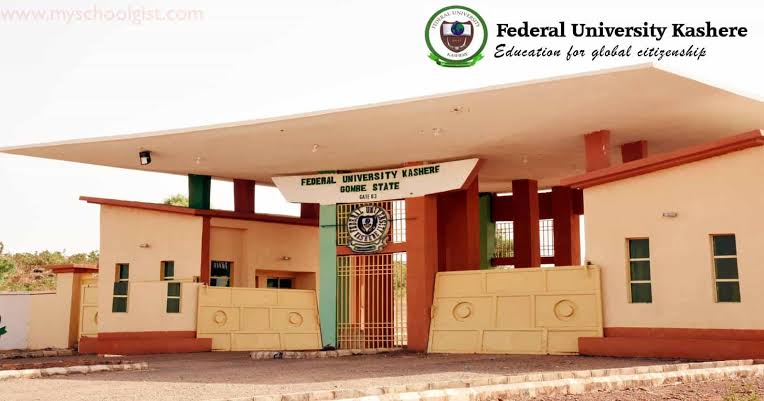

Fourteen years after the establishment of the Federal University of Kashere (FUK) in Gombe State, Christian students say they are still without a permanent worship centre, relying instead on temporary venues that are often overcrowded, relocated or abruptly closed. The situation has resurfaced in campus debates following the recent lockdown of the Multipurpose Sports Complex, a space Christian students had been using for their services.
When the institution was created in 2011, students formed various religious associations, including the Fellowship of Christian Students (FCS). For years, the group used Lecture Theatre FCLT 1 as a worship venue, but as enrolment increased, the hall became too small and, according to students, unsafe for large gatherings. The fellowship later moved to the Multipurpose Hall, which offered more space—until it was unexpectedly locked during preparations for a Sunday service.
FCS President, Damter Isaac, explained that leaders were told the venue had been shut for renovation and would remain closed until after a forthcoming public lecture. The sudden disruption forced the students to return temporarily to FCLT 1 after relocating their equipment. Although the matter was resolved administratively, the incident revived long-standing concerns about the absence of a chapel.
A visit to the campus revealed that multiple mosques and prayer grounds—at least six—are functional across strategic locations, while no dedicated Christian worship centre exists. This contrast has fuelled online discussions, with posts circulating about the challenges faced by Christian students and shared details of a crowdfunding effort aimed at financing a chapel.
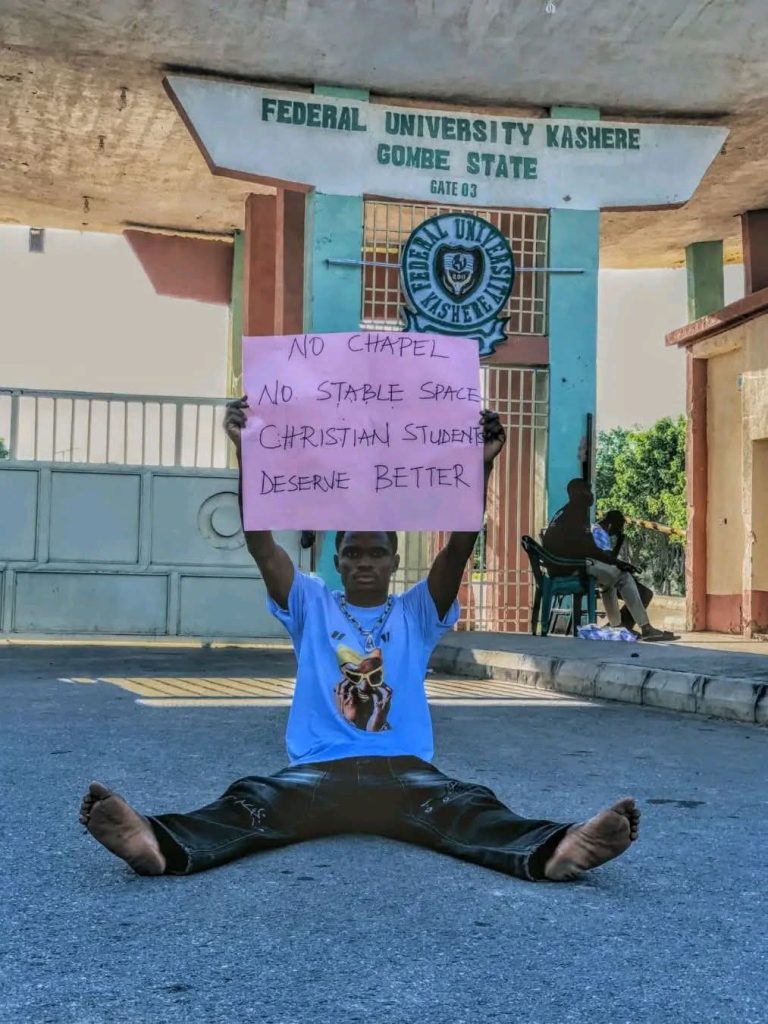
One such donation appeal, verified by students, underscores their desperation for a permanent solution. Meanwhile, a peaceful protest reportedly initiated by a student went viral but was swiftly disowned by the FCS leadership, which said proper procedures had not been followed. The fellowship urged students to remain calm and assured them that the issue would be pursued through dialogue with the university.
The university administration has rejected allegations of marginalisation. FUK Public Relations Officer, Janet Ezekiel, insisted that the management has fulfilled its obligation by allocating land for a chapel and even expanding the space after initial concerns about size. She said a building committee for the Christian Staff Fellowship has already been set up.
Dean of Student Affairs, Prof. Shuaibu Umaru, described the claims of discrimination as unfounded, maintaining that facilities such as the Multipurpose Hall are available to all.
However, some religious leaders and students argue that the matter is not solely about land. Pastor Samuel Elebiyo of the Redeemed Christian Church of God, who once served in Kashere, said the situation reflects a wider pattern across northern institutions, where Christian worship spaces often lag behind. He noted that the original chapel location was allegedly moved to a more remote part of the campus, adding to students’ difficulties.
For many Christian students, the absence of a chapel goes beyond documents and approvals. It speaks to questions of visibility, access and equal treatment on a federally funded campus. After years of shifting from one temporary space to another, they say the uncertainty and repeated disruptions show why a permanent structure is urgently needed.
Lecturers who spoke anonymously describe the situation as a test of institutional inclusiveness and planning. While the university says it has done its part by allocating land, students insist that what they need now is not promises but a functional worship centre—something they have been waiting for since 2011.