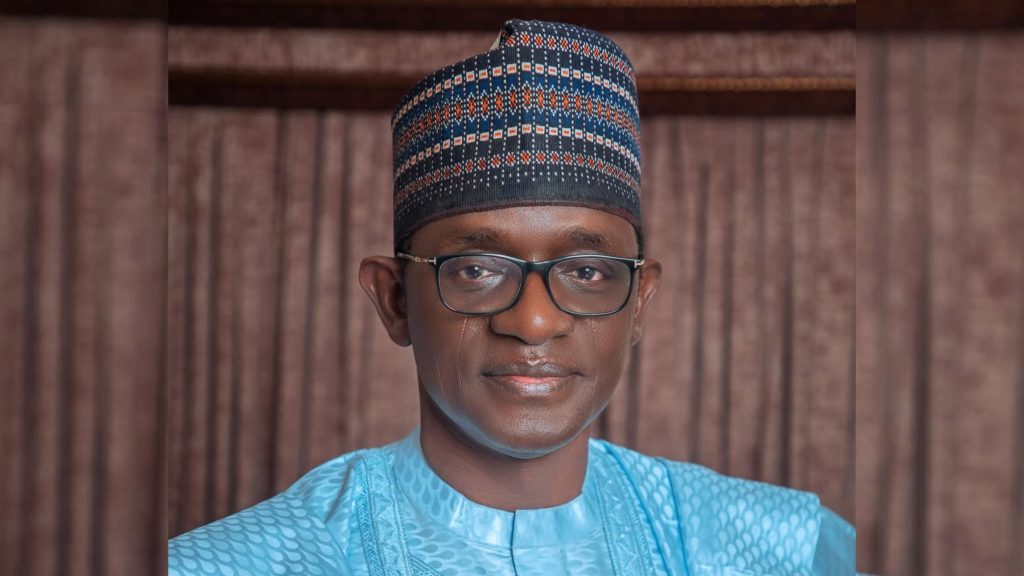

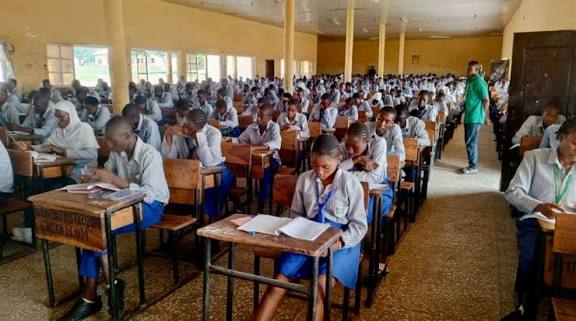
The Commander of the National Safe Schools Response and Coordination Centre, Emmanuel Ocheja, has announced plans to increase the deployment of security personnel to schools across the country as part of efforts to strengthen protection and counter emerging threats.
Speaking in an interview, Ocheja said the initiative is focused on building a comprehensive security framework that combines physical protection with intelligence-led operations. He explained that the approach would also place greater emphasis on community involvement, particularly in schools located in vulnerable areas.
According to him, the project aims to deepen engagement with host communities through targeted training and improved systems for sharing timely and credible security information.
“In 2026, we intend to develop a more robust security architecture for schools, with increased physical security presence,” he said. “State governments and other stakeholders will play stronger roles in collaboration, awareness campaigns and the establishment of Command and Control Centres.”
Ocheja noted that the centres would serve both urban and rural schools, helping to coordinate responses and ensure faster communication with the project’s national headquarters.
He added that while dialogue, sensitisation and other non-kinetic measures would be prioritised, the capacity to deploy kinetic responses would be retained when necessary. Enhanced cooperation with other security agencies, local vigilante groups and organisations such as Man O’ War, he said, would further bolster school safety.
The commander also disclosed that the programme plans to expand security training for teachers, school administrators and students to improve awareness, early detection of risks and emergency response.
Despite the growing insecurity around schools, Ocheja expressed concern that 30 states are yet to fully implement the Federal Government’s Safe Schools Initiative.
The initiative was launched in May 2014 following the abduction of schoolgirls in Chibok, Borno State. It began with a $10 million pledge and later evolved into a multi-donor trust fund coordinated with the United Nations to safeguard education from attacks.
Nigeria has since signed and ratified the Safe Schools Declaration, hosted the fourth Global Safe Schools Declaration Conference in Abuja, and adopted a National Policy on Safety, Security and Violence-Free Schools in 2021. The programme is backed by a ₦144.8 billion financing plan covering 2023 to 2026, supported by federal, state and donor funding. However, only limited funds have been released, with state-level contributions remaining uneven.
The slow pace of implementation has left many schools exposed, contributing to repeated attacks and discouraging school attendance, particularly in northern states, where the number of out-of-school children continues to rise.
Recent incidents include the November 17, 2025 attack on Government Girls Comprehensive Secondary School in Maga, Kebbi State, where 24 students were abducted and the vice-principal killed. Days later, on November 21, gunmen invaded St. Mary’s Catholic School in Papiri, Niger State, abducting hundreds of pupils and staff. Authorities later confirmed that 303 students and 12 teachers were taken in what became one of the largest mass kidnappings in recent years.
The attack occurred despite prior intelligence warnings and government orders to close boarding schools in the area, which the affected school had reportedly defied.
Several northern states have since shut down schools as abductions persist. States affected include Abia, Adamawa, Akwa Ibom, Anambra, Bauchi, Bayelsa, Borno, Cross River, Delta, Ebonyi, Edo, Ekiti, Gombe, Imo, Kaduna, Kano, Kebbi, Kogi, Kwara, Lagos, Niger, Ogun, Ondo, Osun, Oyo, Plateau, Sokoto, Taraba, Yobe and Zamfara.
Findings also show that although the Federal Capital Territory, Benue, Nasarawa, Katsina, Rivers and Enugu states have provided coordination centres for the programme, most of the facilities remain unequipped. Essential electronic devices and surveillance tools required to make the centres operational have not been installed.
In Jigawa State, a coordination centre has reportedly been donated and equipped, but it is yet to be activated, further limiting the effectiveness of the Safe Schools Initiative nationwide.