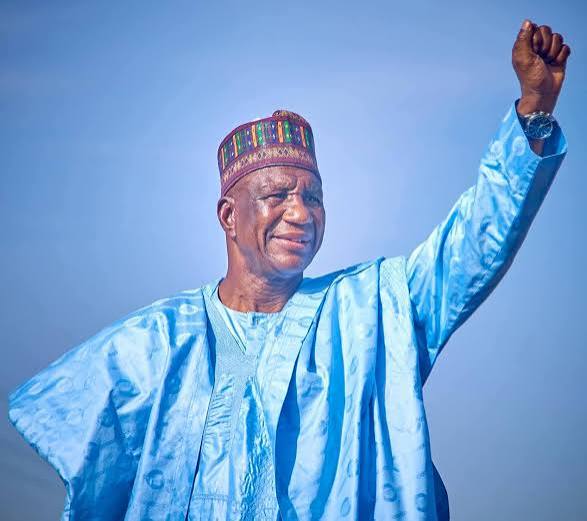

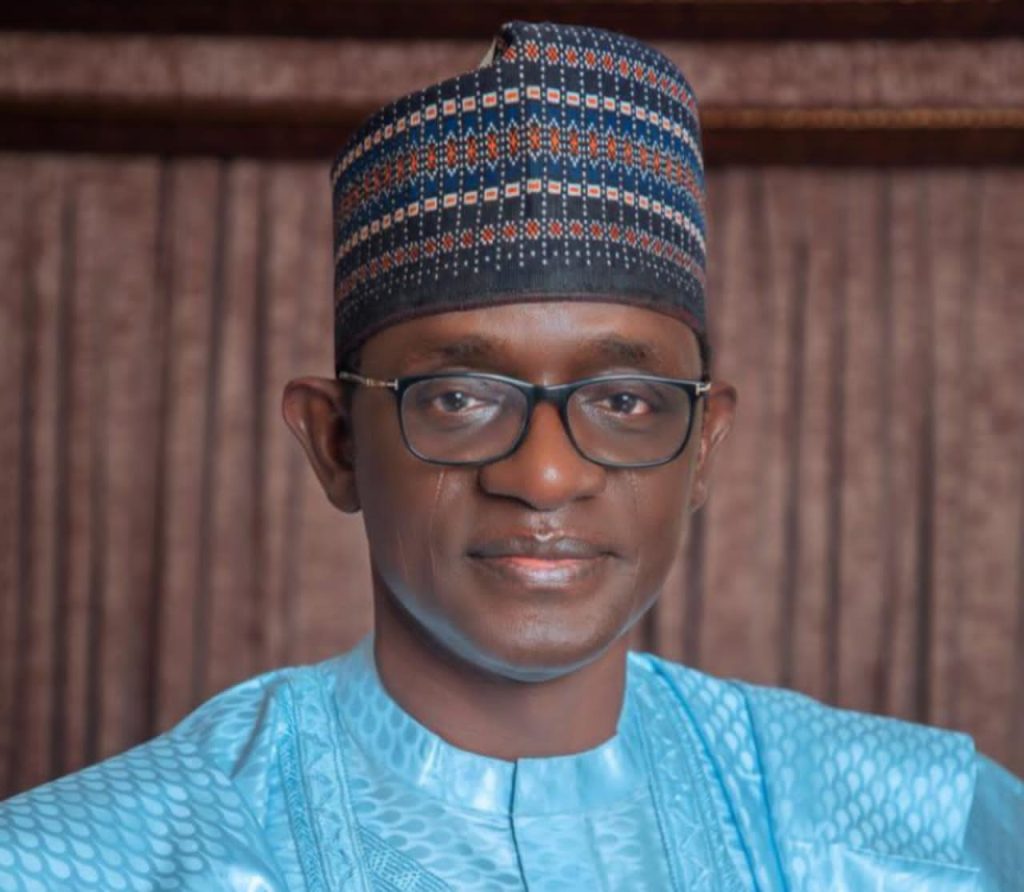
As 2025 draws to a close, Governor Mai Mala Buni, CON, of Yobe State stands resolute—unmoved by sustained criticism, undistracted by political attacks, and firmly anchored to purpose-driven leadership. In the face of opposition narratives, and media scepticism, Governor Buni has remained focused on one central mission: to rebuild Yobe State, restore confidence in governance, and improve the quality of life of its people.
Throughout his tenure, the Governor has faced intense scrutiny. Critics have questioned the pace of development, mischaracterised policy intentions, and at times personalised attacks against his leadership style. Yet, rather than engage in distractions, Gov. Buni chose the harder path—governance through delivery. The result is a record of measurable achievements across critical sectors of development.
Health Sector: Rebuilding a Broken System
Governor Mai Mala Buni’s administration undertook a comprehensive overhaul of Yobe State’s healthcare system, moving it from emergency response to sustainable service delivery.
- Model Primary Healthcare Centres (PHCs): Construction and full rehabilitation of PHCs across all 178 wards of Yobe State, including Damaturu, Potiskum, Gashua, Nguru, Geidam, and Buni Yadi.
- Yobe State Specialist Hospital Upgrade (Damaturu): Expansion of diagnostic capacity, modern theatre equipment, and specialist units.
- Healthcare Workforce Expansion: Recruitment and deployment of doctors, nurses, midwives, and community health workers to rural areas.
- Contributory Healthcare Scheme: Strengthening access to affordable healthcare for civil servants and vulnerable populations.
- Immunisation and Maternal Health Drive: Improved cold-chain systems and outreach services leading to higher immunisation coverage.
- Reduced maternal and infant mortality rates.
- Improved access to healthcare in hard-to-reach communities.
- National recognition for excellence in primary healthcare delivery.
Education: Investing in the Future
Education reform under Gov. Buni focused on rebuilding infrastructure, improving quality, and expanding access at all levels.
- Construction and Rehabilitation of Schools: New classroom blocks and renovations across Damaturu, Potiskum, Fika, Bade, Nangere, Yusufari, and other LGAs.
- Science and Technical Schools Upgrade: Modern laboratories and equipment supplied to technical colleges in Potiskum and Gashua.
- Teacher Recruitment and Training: Employment of qualified teachers and continuous professional development programmes.
- Scholarship and Bursary Schemes: Financial support for Yobe students in tertiary institutions nationwide.
- Digital and Literacy Initiatives: Support for ICT-based learning and language proficiency programmes.
- Increased school enrolment and retention.
- Improved learning outcomes.
- Global recognition through academic excellence of Yobe students.
Security: From Fear to Stability
Governor Buni prioritised security as the foundation for development in a post-insurgency state.
- Security Logistics Support: Provision of patrol vehicles, communication equipment, and operational logistics to security agencies.
- Community Policing and Vigilante Support: Strengthening local security structures across affected LGAs such as Gujba, Geidam, Tarmuwa, and Gulani.
- Reintegration and Resettlement: Support for return of internally displaced persons (IDPs) to resettled communities.
- Restoration of peace and normalcy.
- Revitalisation of economic and social activities.
- Increased investor and community confidence.
Infrastructure Development: Connecting Communities
Massive investment in infrastructure transformed connectivity and urban development across Yobe State.
- Damaturu Flyover and Underpass: Urban traffic decongestion and city modernisation.
- Damaturu–Kalallawa Road: Improved inter-state and inter-community connectivity.
- Gujba–Ngalda Road and Township Roads: Facilitating trade and mobility.
- Drainage and Flood Control Projects: Urban flood mitigation in Damaturu and Potiskum.
- Water Supply Projects: Solar-powered boreholes across rural communities.
- Reduced travel time and transport costs.
- Improved urban planning and rural access.
- Boosted economic activities.
Human Development and Civil Service Reform
Gov. Buni strengthened governance by investing in people and institutions.
- Civil Service Training Programmes: Capacity-building through workshops and national institutions.
- Regular Salary and Pension Payments: Ensuring welfare stability for workers and retirees.
- Institutional Reforms: Digitisation and process improvements across ministries and agencies.
- Enhanced efficiency and accountability.
- Improved morale within the civil service.
- National recognition for human capital development.
Women, Youth, and Sports Development
Empowerment of women and youth formed a central pillar of the administration.
- Women Empowerment Grants: Financial support for small-scale businesses across LGAs.
- Youth Skills Acquisition Centres: Vocational training in tailoring, ICT, mechanics, and agriculture.
- Sports Infrastructure and Competitions: Support for state teams and grassroots sports development.
- Reduced unemployment.
- Enhanced youth engagement and social inclusion.
- Promotion of unity and healthy lifestyles.
Agriculture: Strengthening the Backbone of the Economy
Agriculture received unprecedented support under Gov. Buni’s leadership.
- Distribution of Farm Inputs and Machinery: Tractors, fertilisers, and seeds to farmers across the state.
- Grain Reserves and Storage Facilities: Strengthening food security.
- Irrigation and Climate-Smart Agriculture Projects: Enhancing productivity and resilience.
- Erosion and Gully Control Projects: Protecting farmlands and communities.
- Increased agricultural output.
- Improved farmer livelihoods.
- Strengthened food security.
Power and Energy
The administration expanded access to electricity through innovative and sustainable solutions.
- Rural Electrification Projects: Extension of power to underserved communities.
- Solar Power Initiatives: Solar streetlights and borehole systems across towns and villages.
- Improved productivity.
- Enhanced security and quality of life.
Religious Fairness and Social Harmony
Governor Buni maintained a firm commitment to inclusiveness and equity.
- Faith-Inclusive Governance: Fair representation in appointments and public engagements.
- Support for Religious Institutions: Balanced support for Islamic and Christian communities.
- Strengthened unity.
- Sustained peaceful coexistence.
Looking Ahead: Greater Things to Come
As Governor Mai Mala Buni rounds up his tenure, Yobe State stands on a solid foundation. Ongoing projects in infrastructure, healthcare, education, and economic development are set for completion, while new initiatives aim to consolidate gains.
Yobeans can expect accelerated development, expanded social investments, and deeper institutional reforms. Any successor will face a herculean task sustaining the pace, vision, and discipline established under Gov. Buni’s leadership.
An Asset to Nigeria and Beyond
Beyond Yobe State, Gov. Mai Mala Buni has remained a stabilising force in national politics and governance. His leadership experience, administrative competence, and commitment to democratic values have earned him respect across Nigeria and beyond.
Governor Mai Mala Buni, CON, closes 2025 not weakened by criticism, but strengthened by results. His legacy is written in restored institutions, empowered citizens, and a state repositioned for sustainable growth. He finishes the year—and his tenure—stronger.