
The Federal Government has unveiled a nationwide programme to provide free financial inclusion and literacy training to 10 million Nigerians, with a focus on women and young people.
The initiative is being driven by the Office of the Vice-President through the Presidential Committee on Economic and Financial Inclusion, chaired by Vice-President Kashim Shettima. It is aimed at equipping participants with financial management skills, investment knowledge and digital capabilities to support long-term wealth creation.
As part of the rollout, the committee signed a memorandum of understanding with six professional bodies to jointly develop training modules, certification tracks, digital skills projects and mentorship platforms intended to strengthen the country’s financial and enterprise workforce.
The partner organisations include the Institute of Chartered Accountants of Nigeria, the Chartered Institute of Bankers of Nigeria, the Chartered Institute of Stockbrokers, the National Institute of Credit Administration, the Chartered Risk Management Institute, and the Nigerian Institute of Innovation and Entrepreneurship.
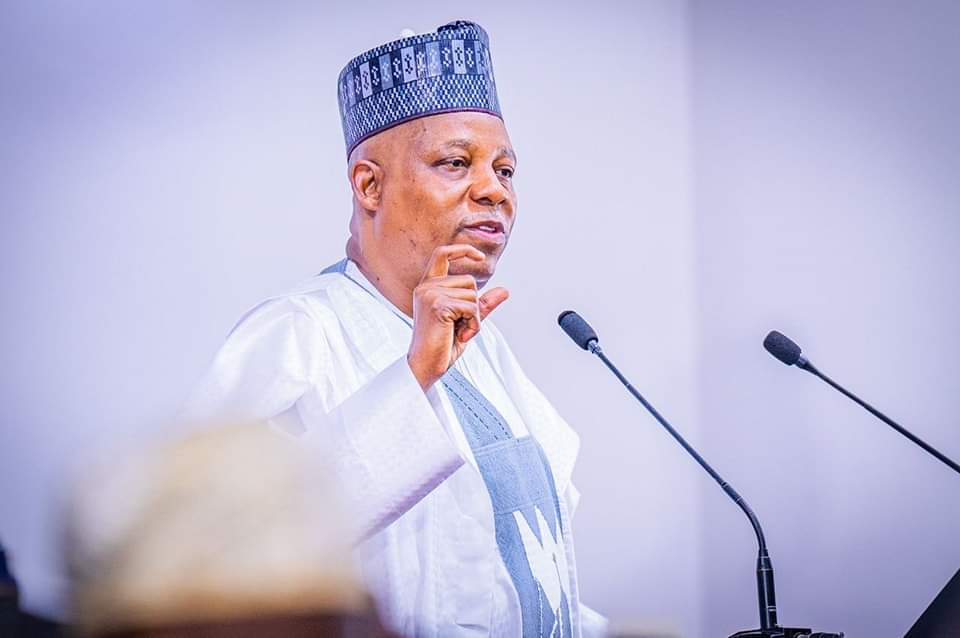
Speaking at the signing, Shettima described the agreement as a strategic investment in human capacity rather than a routine administrative exercise. He said Nigeria’s demographic potential could only be realised if women and young people are equipped with the skills and ethical grounding required in a fast-changing digital economy.
According to him, the Aso Accord on Economic and Financial Inclusion recognises that access to financial services alone is insufficient without competence and trust. He warned that ambitions to build a trillion-dollar economy would falter without strong skills, coordinated standards and effective professional collaboration.
The vice-president said the framework would allow the professional bodies to pool expertise in areas such as training, policy dialogue, digital transformation and youth empowerment. He stressed that capacity development is central to meaningful financial inclusion, arguing that without skilled practitioners across accounting, banking, risk management and innovation, inclusion would remain theoretical.
Shettima directed that the programme give priority to women and youth and urged the implementing partners to treat the agreement as a working platform for measurable action. He formally declared the commencement of the training on behalf of President Bola Tinubu.
In remarks, the President of the Institute of Chartered Accountants of Nigeria, Haruna Yahaya, praised the administration’s economic reforms and said the training programme reflects growing stability and opportunity in the economy. He pledged the institute’s support toward achieving the project’s goals.
Chief Executive Officer of WAWU Africa, Emmanuel Lennox, whose organisation is serving as a technical partner, assured that the company would provide the digital infrastructure required for effective delivery.
Technical Adviser to the President on Economic and Financial Inclusion, Nurudeen Zauro, said financial exclusion often stems from weak skills and institutional gaps, not just lack of access. He emphasised that inclusion becomes meaningful only when individuals and institutions can use financial systems responsibly and productively.
The event concluded with the formal signing of the memorandum of understanding between the Federal Government and the participating professional bodies.