

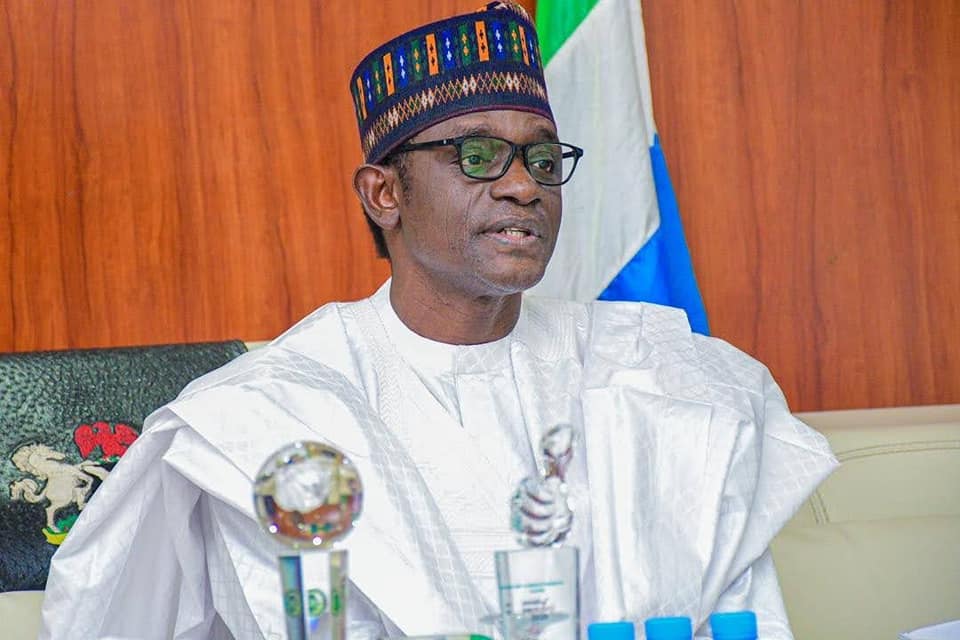
In the often turbulent landscape of Nigerian politics, where shifting loyalties and opportunistic alignments have unfortunately become the norm, the recent statement by Mai Mala Buni that he would rather die than betray the trust between him and his predecessor has sparked intense reactions across political and public circles. While critics have rushed to misinterpret or sensationalize his words, a more sober and reflective reading reveals something far more profound: a rare reaffirmation of moral commitment, loyalty, and integrity in public leadership.
The governor’s remark should not be viewed through the narrow lens of political rhetoric. Rather, it must be understood as a principled declaration aimed at correcting a troubling norm that has come to define politics in Nigeria. For decades, the nation’s political culture has been plagued by the erosion of values—where loyalty is often temporary, ideology is abandoned at convenience, and trust between political actors is frequently sacrificed on the altar of ambition. In such an environment, integrity is treated as weakness rather than strength.
Governor Buni’s statement stands in direct opposition to that culture. By publicly affirming the sanctity of trust between himself and his predecessor, he has drawn attention to an important principle: leadership must be built not only on power and position, but also on honour, loyalty, and moral responsibility.
For those of us who have carefully studied the leadership journey of Mai Mala Buni, the statement is entirely consistent with the character he has demonstrated over the years. Known for his calm disposition and measured style, Buni has never been one to engage in unnecessary political theatrics. Yet beneath his quiet approach lies a leader whose record speaks with clarity and substance.
Indeed, one of his most favorite quotes speaks about the posture of his humility and heart, reflecting the values that guide his leadership and public conduct. It says:
“do not let the prayers of a man deceive you nor his fasting. Rather, look at the truthfulness of his speech, his trustworthiness whenever he is entrusted with, and how he acts whenever he is given wealth and/ or power”
This quote mirrors the philosophy that appears to shape Governor Buni’s approach to governance and relationships in public life. It emphasizes that true character is revealed not merely through outward expressions of piety, but through honesty, trustworthiness, and responsible conduct when entrusted with authority.
In truth, Nigeria’s political history has too often celebrated betrayal as strategy and opportunism as wisdom. Political godsons turn against their benefactors with startling speed, alliances dissolve overnight, and personal gain frequently overshadows public good. This unhealthy posture has damaged public confidence in leadership and weakened the ethical foundation upon which governance should stand.
It is precisely this pattern that Governor Buni’s statement seeks to challenge. His words represent an attempt to restore dignity and honour to political relationships—values that should be central to public service but have regrettably become scarce.
Since assuming office as governor of Yobe State, Buni has pursued policies that prioritize long-term development, stability, and institutional growth. Under his administration, the state has witnessed significant strides in infrastructure development, particularly in road construction and urban renewal projects designed to improve connectivity and stimulate economic activity.
Equally notable has been his administration’s focus on education. Through the construction and rehabilitation of schools, recruitment of teachers, and provision of learning materials, Buni has worked to strengthen the educational foundation of the state—recognizing that sustainable development begins with human capital.
Healthcare has also received considerable attention. The renovation of hospitals, expansion of primary healthcare services, and efforts to improve medical accessibility in rural communities have contributed to a more responsive healthcare system in the state.
In agriculture, which remains the backbone of the local economy, his government has introduced programs aimed at supporting farmers with inputs, equipment, and extension services, helping to boost productivity and rural livelihoods.
These achievements have steadily positioned Yobe on a path of recovery and progress, particularly considering the security and developmental challenges the state has faced over the years.
It is therefore important to emphasize that Governor Buni’s leadership style may be quiet, but it is far from ineffective. His governance philosophy appears to favour substance over spectacle—delivering results rather than chasing headlines. In many ways, his administration represents the kind of steady and disciplined leadership that Nigerian politics often lacks.
For this reason, the recent criticism directed at his statement is both unfortunate and misplaced. Instead of attacking a leader for affirming loyalty and integrity, such a declaration should be welcomed as a refreshing departure from the cynical politics that has dominated the national stage for too long.
If Nigeria hopes to rebuild trust in its political institutions, it must begin by celebrating leaders who demonstrate ethical commitment and personal honour. Young men and women observing the country’s political environment need examples that show leadership can still be guided by principles rather than convenience.
In that regard, Governor Buni’s words serve as more than a personal declaration—they represent a statement of values. They remind the nation that loyalty, gratitude, and trust remain virtues worth defending.
And if no one speaks in defence of such ideals, then for the sake of posterity those of us who have closely observed and understood the leadership of Mai Mala Buni must do so. The truth must be protected, and the record must be set straight.
History will ultimately judge leaders not merely by the noise surrounding them, but by the integrity they preserved and the legacy they built. For Governor Buni, his quiet but consistent achievements ensure that his work will continue to speak—long after the controversies of the moment have faded.
written by A. A. Mshelia, a public affairs analyst from Abuja