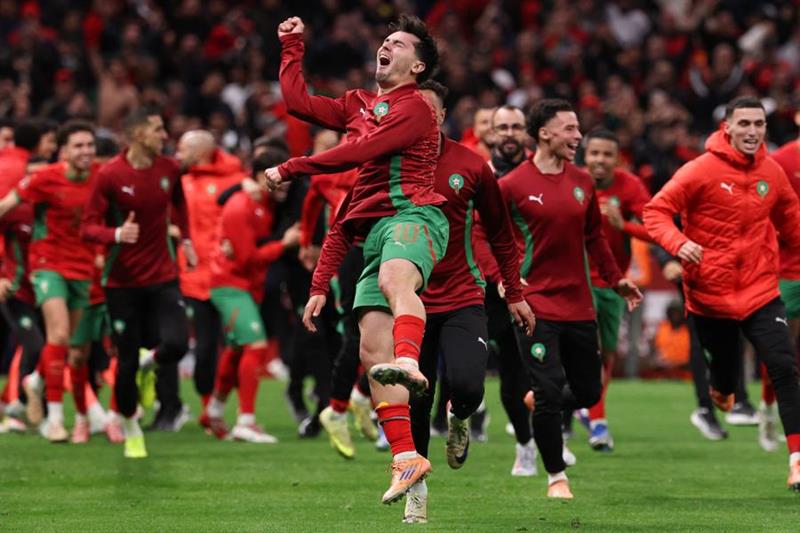

The Africa Cup of Nations remains the premier international football competition on the continent, bringing together Africa’s best national teams under the banner of the Confederation of African Football. Over the decades, the tournament has produced unforgettable moments and crowned some of the game’s greatest nations, with Egypt leading the roll of honour on seven titles, followed by Cameroon with five, Ghana with four and Nigeria with three.
As Morocco prepares to host the 35th edition of the tournament from December 21, 2025 to January 18, 2026, attention has once again turned to the stars whose careers shone brightly but who never managed to lift the famous Afcon trophy.
Mohamed Salah (Egypt)
For Egypt’s talisman and captain, Afcon glory has remained frustratingly out of reach. Now 33, Salah has twice come agonisingly close, finishing as a runner-up in 2017 and 2021. Egypt’s last triumph came in 2010, before he had established himself as a global star, while the Pharaohs’ failure to qualify for three straight tournaments between 2012 and 2015 delayed his Afcon debut.
His first appearance ended in a final defeat to Cameroon, while four years later Egypt lost on penalties to Senegal after another tense showdown. Injury ruled him out of Afcon 2023 as Egypt exited in the round of 16. The upcoming tournament may be his last realistic chance to crown his international career with continental silverware.
Didier Drogba (Ivory Coast)
Renowned for delivering on football’s biggest stages, Drogba’s Afcon story was marked by cruel twists. He captained Ivory Coast to two finals, in 2006 and 2012, but penalties proved decisive both times. He missed in the shootout loss to Egypt in 2006 and later fired a crucial spot kick over the bar against Zambia in 2012, before another shootout defeat.
Despite consistent deep runs in the tournament, the ultimate prize eluded him. Ironically, Ivory Coast finally lifted the trophy in 2015, shortly after Drogba had stepped away from international football.
George Weah (Liberia)
Africa’s only Ballon d’Or winner enjoyed immense success at club level, dazzling fans in Europe with Paris Saint-Germain and AC Milan. Internationally, however, his opportunities were limited by Liberia’s modest football pedigree.
Liberia qualified for Afcon just twice during Weah’s playing career, in 1996 and 2002, and failed to advance beyond the group stage on both occasions. He scored only once at the tournament, yet his legacy endured beyond football, as he later served as Liberia’s president from 2018 to 2024.
Nwankwo Kanu (Nigeria)
A player of elegance and intelligence, Kanu achieved remarkable success at club level and won Olympic gold with Nigeria in 1996. Afcon success, however, proved elusive.
His nearest moment came in the 2000 final on home soil, when Nigeria lost to Cameroon on penalties, with Kanu missing his kick. Although the Super Eagles reached the semi-finals several times during his international career, Kanu retired without the continental title that many felt his talent deserved.
Michael Essien (Ghana)
Essien was the driving force of a talented Ghana side that emerged after the country’s last Afcon triumph in 1982. A dominant midfielder with leadership qualities, he mirrored his club success with Chelsea at international level, but injuries repeatedly intervened.
He missed Afcon 2006 entirely, led Ghana to third place in 2008, and was sidelined during the latter stages of the 2010 tournament as the Black Stars reached the final, only to lose to Egypt. Persistent fitness issues curtailed his international journey, leaving him among the great African players never to experience Afcon glory.