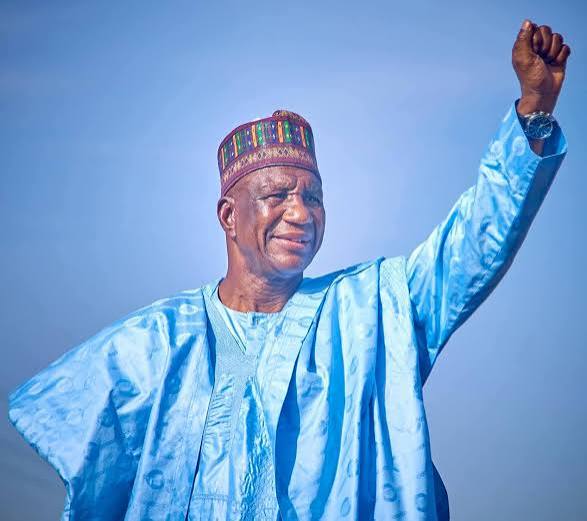


In recent weeks, there has been a coordinated wave of criticism, propaganda, and politically motivated attacks against the Executive Governor of Yobe State, His Excellency Governor Mai Mala Buni CON, particularly following reports surrounding the endorsement of former Secretary to the State Government, Baba Mallam Wali, as a preferred successor within APC political consultations.
While political debates are normal in any democracy, what is now unfolding goes far beyond healthy democratic engagement. It increasingly reflects a deliberate attempt to distort facts, discredit a government that has delivered visible progress, and create unnecessary tension within the political atmosphere of Yobe State.
First, it must be stated clearly and without ambiguity: the wellbeing of the people of Yobe State has always been, remains, and will continue to be the number one priority of Governor Mai Mala Buni.
Governor Buni’s public life did not begin when he became governor. His record of service, humility, accessibility, and commitment to the ordinary people predates his emergence as governor. From his days as a grassroots politician, party administrator, APC National Secretary, and later Governor, he has consistently demonstrated loyalty to service, institutional stability, and human development.
Even before becoming governor, Mai Mala Buni had already built a reputation as a bridge-builder, a stabilizer, and a leader deeply committed to the progress of Yobe State and Nigeria at large. His role in strengthening the APC during difficult national moments and his ability to manage complex political transitions earned him national respect across political divides.
Since assuming office in 2019, Governor Buni’s administration has focused heavily on rebuilding Yobe State, particularly in the aftermath of insurgency-related destruction and economic challenges.
Under his leadership, Yobe State has witnessed:
- Massive road construction and urban infrastructure development across several local governments.
- Expansion and rehabilitation of schools, educational facilities, and learning environments to improve access to quality education.
- Recruitment and support for teachers and healthcare workers.
- Increased investment in healthcare delivery, hospitals, primary healthcare centers, and medical outreach programs.
- Agricultural interventions and empowerment programs aimed at improving food security and supporting rural farmers.
- Youth and women empowerment initiatives through skills acquisition, business support, and employment opportunities.
- Strengthening of humanitarian response systems through agencies like YOSSEMA to support vulnerable communities affected by insecurity and displacement.
- Improved security collaboration with federal agencies and community structures to stabilize many affected communities.
- Expansion of water supply projects, rural electrification, and social intervention programs across the state.
Most importantly, Governor Buni has governed with relative peace, maturity, and political inclusiveness in a state that once faced enormous security and humanitarian pressure.
The recent attacks attempting to portray his support for Baba Mallam Wali as anti-democratic must therefore be viewed honestly and objectively.
Across Nigeria, political parties regularly engage in consultations, endorsements, and consensus-building processes. Consensus arrangements are neither new nor illegal in Nigerian politics. In fact, reports indicate that APC stakeholders in Yobe had earlier agreed on consensus as part of their internal political strategy ahead of 2027.
Critics are entitled to support their preferred aspirants, but disagreement should not translate into coordinated media hostility, deliberate misinformation, or attempts to demonize a governor whose administration has remained focused on development and stability.
It is also important to ask: why is there such an aggressive and unusual level of sponsored attacks simply because a political preference was expressed within party consultations?
The pattern increasingly suggests that certain political interests are less concerned about democracy and more interested in creating confusion, weakening public trust, and destabilizing the political atmosphere in Yobe State.
The consistency, sponsorship pattern, coordinated publications, repeated narratives, and aggressive media circulation clearly indicate that these attacks are not ordinary public criticism. They reflect a calculated agenda by individuals uncomfortable with continuity, stability, and the preservation of the developmental gains recorded under Governor Buni’s administration.
No administration is perfect, and constructive criticism remains part of democracy. However, fairness also demands acknowledging visible achievements, institutional stability, and sincere leadership intentions.
Governor Mai Mala Buni has shown through action, not mere words, that leadership is about service, sacrifice, continuity, and prioritizing the people above politics.
History will remember him not for propaganda sponsored against him, but for the stability he provided, the institutions he strengthened, the infrastructure he built, and the lives touched under his leadership.
The people of Yobe State deserve mature political engagement, not coordinated campaigns of bitterness and distortion.
At this critical time, stakeholders, elders, youths, and patriotic citizens must resist attempts to divide the state through sponsored narratives and unnecessary political tension. The focus should remain on preserving peace, protecting development, and ensuring that Yobe State continues on the path of growth, stability, and responsible leadership.
Written by A. A. Mshelia, Public Affairs Analyst from Abuja