
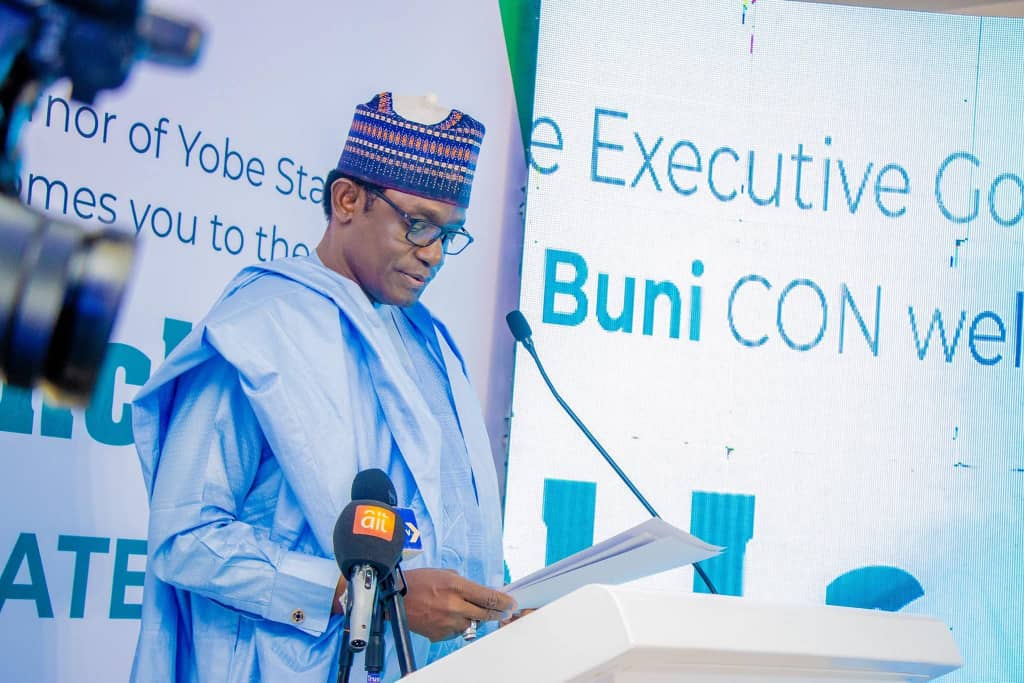
Yobe State, long affected by the ravages of insurgency, is undergoing an unprecedented transformation under the leadership of Governor Mai Mala Buni, CON. His administration has placed education at the centre of the state’s recovery agenda, viewing it not merely as a governmental responsibility but as a long-term investment in human capital, stability and social renewal.
Analysts, community stakeholders and education experts widely agree that Yobe is witnessing one of the most ambitious and comprehensive revamps of its education system in recent history.
When Governor Buni assumed office, he met an education sector marked by infrastructural decay, crowded classrooms, vandalised buildings and thousands of out-of-school children displaced by years of insecurity. The administration’s first steps were direct and deliberate: restore, rebuild and modernise.
Since then, approximately 300 schools damaged or abandoned during the insurgency have been rehabilitated and reopened. A total of 627 new classrooms have been constructed across the state, while 448 old ones have been renovated to restore safe learning conditions.
The government has fenced 61 schools to enhance safety, installed 35 solar-powered boreholes to ensure adequate water supply and constructed 178 toilet blocks to improve hygiene, particularly for female students. In addition, 14 modern Mega and Model Schools equipped with laboratories, libraries, ICT centres and hostel facilities have been completed.
Ten Girls’ Senior Secondary Schools have also been established to encourage continuity in girl-child education and address high dropout rates associated with early marriage and economic challenges.
Beyond physical structures, the administration has recognised the central role of teachers in shaping educational outcomes. Since 2019, more than 9,400 teachers have been trained and retrained in new methodologies and curriculum delivery.
Recruitment drives have brought fresh manpower into the system, particularly in rural communities where shortages were most severe. Schools across the state now receive regular supplies of desks, laboratory equipment, digital learning tools, textbooks and modern teaching aids, significantly improving the atmosphere for both teaching and learning.
Scholarship interventions under the Buni administration represent another defining pillar of the education revival. Through the Recovery Through Education and Scholarships (RETES) programme, thousands of students have received support for tertiary education across Nigerian institutions.
In one of the most extensive foreign scholarship efforts in Yobe’s history, 233 students were sponsored abroad within a single cycle to study medicine, engineering, ICT, agriculture, law, environmental sciences and other relevant fields
Many of these beneficiaries have already returned, contributing to essential sectors such as healthcare, technology, agriculture and public administration, addressing long-standing manpower gaps in the state.
The government’s approach has also emphasised inclusivity, ensuring that vulnerable groups are not left behind. Almajiri children and out-of-school youths have been integrated into formal schooling programmes.
School-feeding and conditional cash-transfer initiatives have helped boost enrollment and retention. Children displaced by conflict have been reintegrated through resettlement schools and temporary learning centres. Targeted support for adolescent girls from low-income backgrounds has helped many remain in school and avoid early marriage.
Over the years, Governor Buni has maintained a consistent stance that education is the foundation upon which Yobe will build a secure and prosperous future. This vision is evident not only in the scale of infrastructure development but also in the depth of the state’s investments in teachers, students and community-based support systems.
Parents describe renewed confidence in the future of their children; teachers report improved motivation and access to tools that elevate their performance; students in both rural and urban communities now have access to opportunities that were unimaginable a decade ago.
With each completed project and each new initiative, the administration continues to reinforce its commitment to ensuring that young people in Yobe are equipped for a world that increasingly demands skills, innovation and resilience.
As the reforms deepen and more milestones are recorded, one message becomes increasingly clear: the policies being implemented today are laying the foundation for the future of an entire generation.