
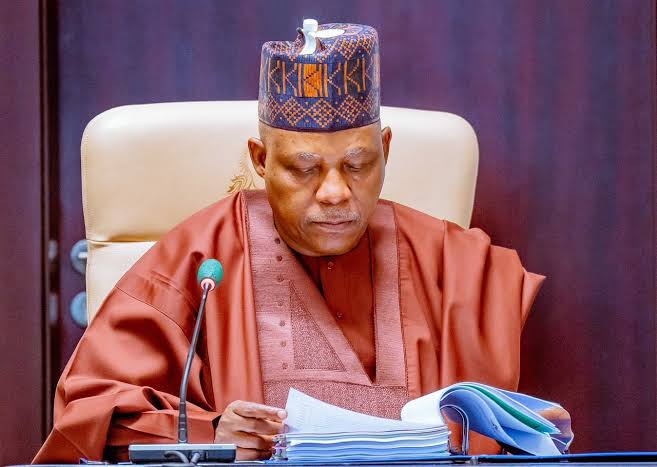
Vice President Kashim Shettima has urged the federal government to restore agriculture as a central component of Nigeria’s education system, arguing that doing so is critical to strengthening food security and economic resilience.
Speaking on Saturday in Abuja at the General Assembly of Farmers, Shettima emphasised that agriculture should be embedded in schools as both a subject and a way of life. He was represented at the event by Uju Rochas-Anwukah, Senior Special Assistant to the President on Public Health.
According to him, every school should maintain functional farms, while agricultural clubs should be revived to expose students to practical farming, responsible land use and the business side of agriculture.
He stated that young Nigerians must grow up understanding that food production is fundamental to national survival and economic prosperity.
Shettima also criticised the long-standing belief that farming is a profession for those who lack better opportunities, describing such thinking as damaging to Nigeria’s development. He called on leaders and institutions to actively participate in agriculture rather than treating it as a symbolic exercise.
He stressed that military and paramilitary organisations, including the Army, Air Force, Navy and NYSC, should maintain sustainable institutional farms as part of national food security efforts.
The Minister of Defence, General Christopher Musa (retd), acknowledged the security challenges faced by farmers but assured them that the government was committed to protecting farming communities. He encouraged farmers to report security threats promptly.
In his remarks, Dr Farouk Mudi, President of the All Farmers Association of Nigeria, highlighted the impact of climate change, rising input costs and insecurity on agricultural productivity. He warned that unpredictable rainfall patterns, flooding and soaring fertiliser prices were making farming increasingly difficult.
Mudi also raised concerns over the livestock sector, noting that despite Nigeria’s large cattle population, the country still spends billions of dollars importing dairy products due to persistent conflicts in the sector.
He lamented that thousands of lives and billions of naira worth of property had been lost to farmer-herder clashes over the past decade, reiterating AFAN’s support for the National Livestock Transformation Plan.
Mudi further cautioned that Nigeria continues to spend enormous sums on food imports, a situation he said undermines local farmers and weakens the nation’s agricultural potential.
He called for stronger policies and investments to revitalise agriculture, restore stability to rural communities and encourage more young Nigerians to take up farming.