
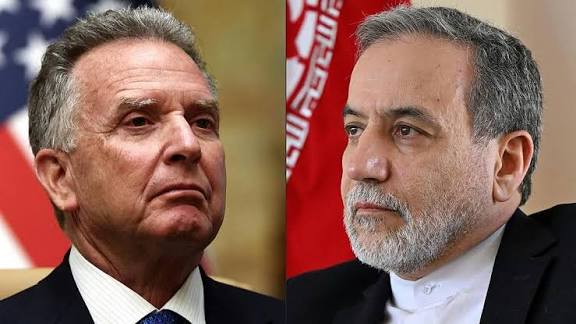
Iran and the United States are set to hold negotiations in Oman on Friday as Washington tests the possibility of renewed diplomatic movement over Tehran’s nuclear programme, while keeping open the option of military pressure.
Both governments confirmed the talks late Wednesday after days of uncertainty over logistics. The meeting marks the first formal encounter between the two countries since the United States joined Israel’s June strikes on Iranian nuclear facilities.
US Middle East envoy Steve Witkoff and Iranian Foreign Minister Abbas Araghchi are expected to lead their delegations in the Gulf sultanate, which has frequently acted as a quiet intermediary between the longtime adversaries.
Ahead of the meeting, Araghchi said Iran would engage in discussions in good faith while insisting on equal treatment and respect. He said lasting agreements must be built on honoured commitments and shared interests.
Tehran added on Thursday that it had a responsibility to pursue diplomacy to preserve peace and expressed hope that Washington would approach the talks with seriousness and realism.
The White House, however, signalled a firm position. Press Secretary Karoline Leavitt said the US delegation would push for what she described as “zero nuclear capacity” for Iran, adding that President Donald Trump retained options beyond diplomacy.
The talks come against a backdrop of political unrest inside Iran and heightened regional tensions. Trump said Thursday that Iran was negotiating because it wanted to avoid confrontation, referencing a large US naval deployment in the region.
While earlier statements from the president had focused on Iran’s internal crackdown, recent remarks have centred more heavily on curbing Tehran’s nuclear ambitions, which Western governments fear could lead to weapons development.
Vice President JD Vance said Trump intended to prioritise diplomatic solutions but would not rule out force if negotiations failed.
International leaders have urged restraint. German Chancellor Friedrich Merz, speaking in Doha, warned of the risk of regional escalation and encouraged Iran to engage seriously. Turkish President Recep Tayyip Erdogan said current signals suggested both sides were leaving room for diplomacy, arguing that conflict would not resolve the crisis.
Disagreements remain over the scope of the talks. Iran has resisted US efforts to broaden discussions to include its regional alliances and missile programme. Reports citing Iranian officials say the current framework will centre on nuclear issues, though related security concerns may still be addressed as part of a wider deal structure.
Analysts remain cautious about the prospects for a breakthrough. The Institute for the Study of War said Iran’s resistance to key US demands could complicate efforts to reach a diplomatic settlement.
Meanwhile, military positioning continues to shape the atmosphere around the negotiations. The United States has moved a carrier strike group into the region, and Iranian officials have warned they would respond to any attack on their territory or assets.
Despite the tensions, both sides are entering the Oman talks under growing international pressure to prevent further escalation and reopen a diplomatic channel that has been largely frozen for months.