

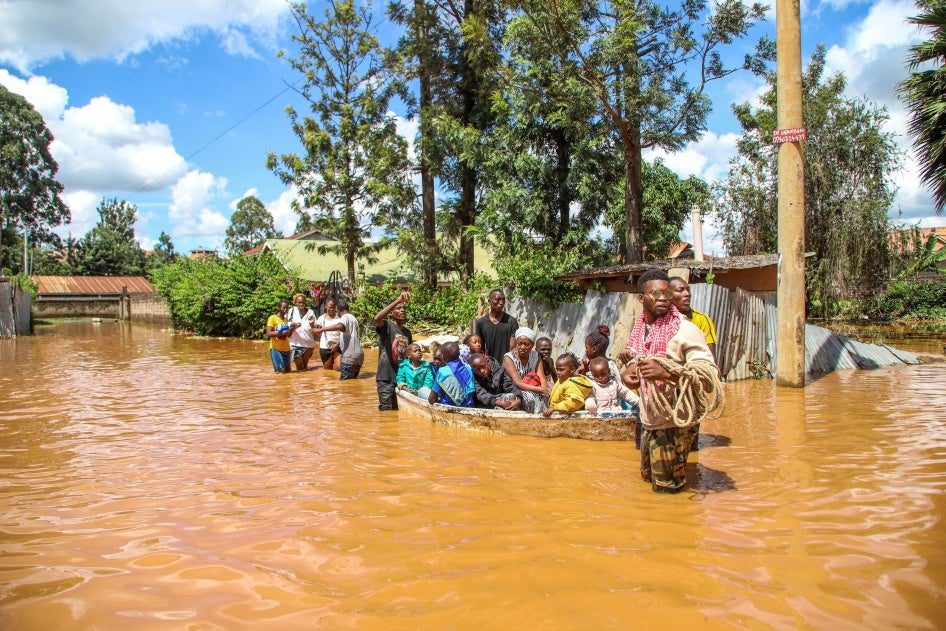
Tourist boats on Kenya’s Lake Naivasha have taken on an unexpected role in recent weeks, ferrying residents out of flooded homes as water levels continue to surge across the Kihoto area. Although the lake has been steadily rising for more than a decade, locals say this year’s flooding is unlike anything they have seen.
“It hasn’t happened like this before,” said resident Rose Alero, one of many whose homes now sit in waist-deep water. Toilets across the district have overflowed, and stagnant pools have left many people ill. “People are stuck… they have nowhere to go,” she added.
Local officials report that the Rift Valley lake has pushed up to 1.5 kilometres inland, submerging hundreds of homes, swamping churches, and leaving police stations surrounded by floating vegetation. In one incident, children had to escape school on improvised rafts when water suddenly surged through the area.
According to Nakuru County’s disaster risk management chief, Joyce Cheche, roughly 7,000 people have been displaced. The flooding has also disrupted wildlife habitats and threatens the region’s tourism and flower-export industries. Cheche said the county has supported evacuation efforts and implemented health precautions, but no financial compensation has been offered.
Workers in the flower sector — a major economic contributor — are staying away over fears of cholera, landslides, and increased encounters with hippos that inhabit the lake. “We didn’t see it coming,” Cheche admitted.
Along the lake’s edge, submerged acacia trunks mark how far the waters have advanced, at times spreading by nearly a metre per day. Similar expansions are being recorded across other Rift Valley lakes, displacing hundreds of thousands.
While many studies link the phenomenon to intensified rainfall driven by climate change, geologist John Lagat of the Geothermal Development Corporation points to tectonic activity as a key factor. Historical records show Lake Naivasha was significantly larger when British settlers arrived in the late 19th century, before geological shifts reduced its size by 1921. Lagat notes that further tectonic movement has sealed off underground outflow channels, causing rising water levels. He added, however, that rainfall increases and land degradation from population pressures are also contributing significantly.
Back in Kihoto, Alero says residents remain anxious. “We are very worried,” she said, fearing what the next rainy season could bring.