
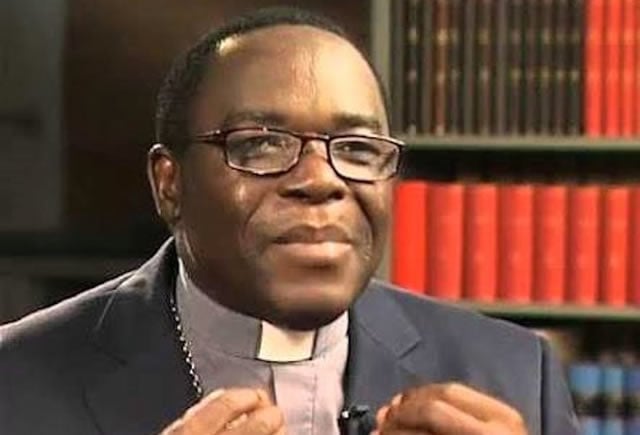
Convener of the National Peace Committee, Bishop Matthew Hassan Kukah, has warned that Nigeria’s worsening fractures, growing insecurity and persistent ethnic tensions are rooted in prolonged governance failures and widespread social exclusion.
He made the remarks in Abuja during a public dialogue on national identity and the lingering indigene–settler dilemma, organised by the National Peace Committee.
Kukah noted that the country can no longer gloss over the widening cracks, stressing that banditry and other security challenges are merely symptoms of a system that has failed to provide a unifying national foundation. According to him, Nigeria’s inability to cultivate a shared sense of belonging has pushed citizens to fall back on tribe, religion and place of origin.
He argued that national rebirth must begin with elevating the idea of Nigerian citizenship, saying, “Only then can we, in unity, resist the oppression of a state increasingly detached from the hopes of its citizens.”
Kukah warned that unless the country rebuilds a collective sense of identity, the cycle of violence, grief and hopelessness will persist. He recalled that the National Peace Committee—established in 2014 to strengthen democracy, reconciliation and national harmony—still finds itself engaging a society divided along identity lines.
He stressed that human migration is universal and should never determine belonging, adding that the failure to embrace a common Nigerian identity has opened doors for manipulative politics.
“Our killers are not the cause of our instability. They have only identified the cracks in our differences, worsened by the indifference and incapacity of the state,” he said.
Calling for urgent efforts to mend the nation’s unity, he said Nigeria must be governed by the rule of law and must treat all citizens as equal stakeholders.
In a goodwill message, the European Union’s Representative to Nigeria and ECOWAS, Gautier Mignot, echoed the call for unity. He urged Nigeria to prioritise citizenship over narrow loyalties and to harness its youth-driven diversity for progress.
Mignot noted that diversity challenges exist everywhere but emphasised that societies flourish when merit takes precedence over ethnic or cultural origins. He added, “Citizens rarely ask a pilot’s tribe before boarding a plane, yet such sentiments often influence political choices.”