
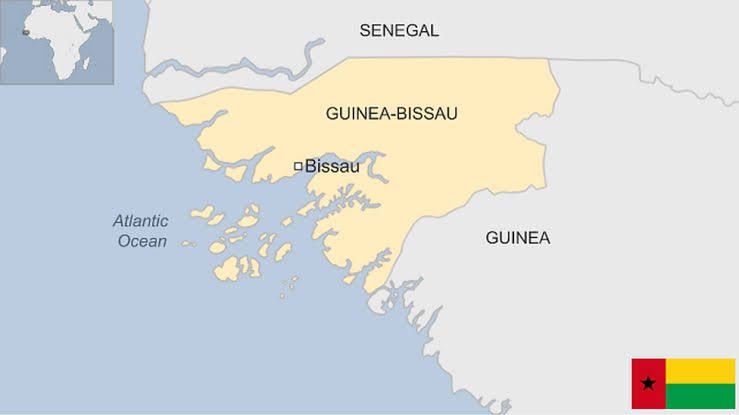
West Africa is once again navigating familiar political turbulence, as Guinea-Bissau’s latest upheaval adds to a region already strained by democratic fatigue, widening governance gaps and rising public frustration. The crisis, though unfolding within Guinea-Bissau’s borders, mirrors a broader pattern that has emerged across the subregion — one in which fragile institutions and political fragmentation are increasingly exploited by ambitious military officers presenting themselves as agents of order.
The tensions in Guinea-Bissau, compounded by claims from the electoral commission that vote-tallying materials were destroyed, have intensified debate within ECOWAS and among local populations about the reliability of democratic systems. The country has experienced no fewer than nine coups or attempted coups since 2003, a frequency that has severely weakened public trust in both civilian leadership and the security establishment.
Across parts of West Africa, comparisons with military-led governments in Burkina Faso, Mali and Guinea are shaping public perception. In certain communities, reports of more coordinated security responses and swift executive actions under military rulers have fed a narrative that juntas are more effective than elected governments. This sentiment, although controversial, is resonating among populations weary of insecurity and economic stagnation.
In Burkina Faso, for instance, the success of early security operations and the assertive posture of the junta have contributed to a belief that military interventions can deliver results where civilian leaders faltered. It is this thinking — the idea of a “reset button” — that some fear is spreading to Guinea-Bissau as political tensions deepen.
Yet observers warn that these perceived gains often mask deeper governance risks. Military regimes typically frontload symbolic reforms, nationalist rhetoric and short-term security improvements, while postponing the long, difficult work of institution-building. Without strong accountability mechanisms and a depoliticised security sector, initial gains can quickly unravel.
For ECOWAS, the crisis presents a major test of its authority. The bloc has condemned the developments in Guinea-Bissau as unacceptable, but its credibility has suffered in recent years due to uneven enforcement of its norms and the withdrawal or suspension of several member states under military rule. The organisation now faces a dilemma: respond forcefully and risk further alienation, or appear weak and contribute to normalising coups.
Public confidence in ECOWAS is also fading. Increasingly, ordinary citizens view the regional body as a protector of entrenched political elites rather than a guardian of democratic principles. This legitimacy gap has, in turn, encouraged military adventurism.
The situation in Guinea-Bissau may continue to destabilise the region, but analysts argue it also presents an opportunity for meaningful reform. A renewed political settlement that strengthens institutions, clarifies the role of the security forces and encourages broader civic participation could help reverse the cycle of instability — but only if political elites, the military and regional partners embrace a shared commitment to long-term stability.
Nigeria is expected to play a central diplomatic role in efforts to restore order, as has traditionally been the case within ECOWAS. However, the country’s capacity is strained by its own internal pressures — including economic hardship, public discontent and recent coup rumours — which may limit the strength of its regional stance.
The crisis in Guinea-Bissau has direct implications for Nigeria. It contributes to the growing perception that coups are a viable alternative to democratic governance, further strains ECOWAS’ crisis-management posture and risks emboldening fringe actors across the region. With Nigeria grappling with domestic challenges, a weakened response may open the door to increased external interference and illicit networks operating through Guinea-Bissau.
Ultimately, Guinea-Bissau’s trajectory in the coming months may shape the regional conversation on whether military regimes are becoming an accepted — or increasingly tempting — response to democratic breakdowns. The episode serves as a reminder that while military rule can impose temporary order, sustainable stability requires strengthening democratic institutions, ensuring accountable governance and rebuilding public trust across West Africa.