
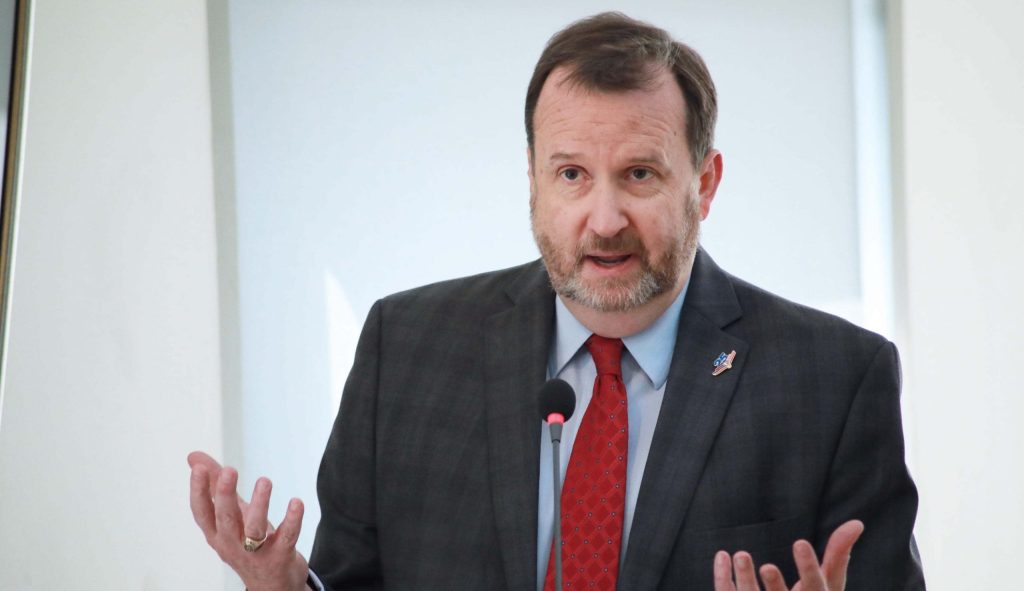
The United States Ambassador to Nigeria, Richard Mills, has said that the recent visa restrictions announced by the U.S. government are intended to strengthen security procedures and are not targeted at Nigerians.
Mills made the clarification on Sunday in Abuja at a news conference held during the visit of a United States Congressional Delegation (CODEL) to Nigeria.
According to the ambassador, the presidential proclamation, scheduled to take effect from January 1, 2026, affects specific visa categories and forms part of broader efforts to secure U.S. borders and protect American communities.
He explained that the review focuses on improving vetting processes and ensuring the availability of credible information during visa applications, rather than penalising Nigerian citizens.
Mills noted that the proclamation clearly outlines the visa categories that may be affected and also provides exemptions for certain groups, including holders of official and diplomatic passports, as well as individuals travelling for religious purposes.
He advised visa applicants and members of the public to consult the official website of the U.S. Embassy for detailed information on the affected categories and exemptions, and to use the embassy’s designated communication channels for specific enquiries.
Speaking at the event, the leader of the U.S. Congressional Delegation, Representative Bill Huizenga, said visa reviews and restrictions were standard tools used to promote compliance and cooperation, not punitive measures against citizens.
Huizenga added that such reviews are primarily directed at government systems and processes, noting that similar measures are applied routinely in various countries around the world.
The News Agency of Nigeria reported that the U.S. government reaffirmed its commitment to strong people-to-people relations with Nigeria while announcing the visa reviews, describing them as part of wider engagement to strengthen bilateral cooperation and address shared security concerns.
Meanwhile, Noblequestdaily recalled that President Donald Trump announced expanded entry restrictions on foreign nationals from 24 countries on December 16, citing persistent deficiencies in screening, vetting and information-sharing that pose risks to U.S. national security and public safety.