
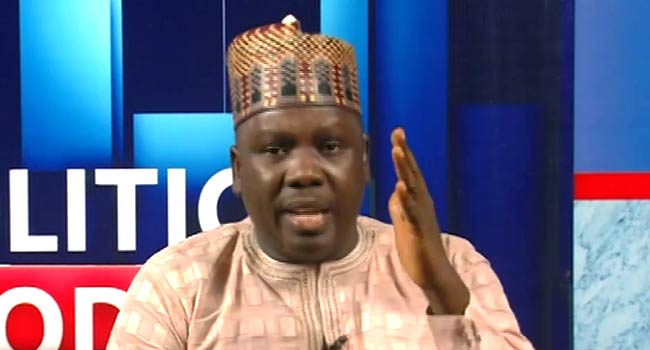
The Special Adviser to President Bola Tinubu on Policy Communication, Daniel Bwala, has highlighted the challenges Nigerian security agencies face in tracking criminals who rely on foreign-based internet services.
Speaking in an interview shared on Instagram Friday, Bwala explained that while domestic digital platforms can be monitored and traced by authorities, criminals operating through services beyond Nigeria’s jurisdiction are much harder to track.
“There is a regulatory body in Nigeria that has the database of Nigerians and their phone numbers. There is also a body that deals with internet service provision, where if you are using an internet service covered within the sphere of Nigeria, they can trace through the IP address,” Bwala said.
He added, “If you are using Starlink, we cannot trace it because Starlink is not registered in Nigeria; it is in space. That is the problem they have in Ukraine and Russia. These terrorists most of the time are using cellular services from neighbouring countries and not from Nigeria, so it becomes tricky.”
Bwala’s remarks underscore the growing technological hurdles confronting security agencies in their fight against banditry and terrorism.
Nigeria has recently experienced a surge in insecurity, with kidnappings, terrorist attacks, and armed banditry affecting numerous communities, particularly in the North-West and North-East. Villages have been attacked, and schoolchildren abducted, causing fear, displacement, and disruption to local economies.
In addition, suspected terrorists and bandits have reportedly used platforms like TikTok to share videos of hostages, weapons, cash, and hideouts. These posts are widely seen as attempts to flaunt their activities and intimidate communities.