
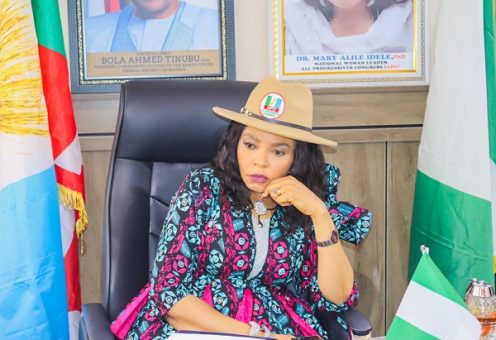
The National Women Leader of the All Progressives Congress, Dr Mary Alile Idele, has renewed calls for greater inclusion of women in Nigeria’s political process, especially within party caucuses and leadership structures.
Her comments followed remarks by President Bola Tinubu at the 14th meeting of the APC National Caucus in Abuja on Thursday, where he stressed the need for more women in the party’s top decision-making body.
Reacting to the President’s statement, Idele described it as a frank admission that had revived conversations on gender balance in politics and reinforced long-standing advocacy efforts by women leaders within the party.
She observed that although women constitute between 49 and 50 per cent of Nigeria’s population, they hold less than 10 per cent of leadership positions in political parties nationwide.
Idele also noted that women currently occupy only about four per cent of seats in the National Assembly, a trend she said highlights the depth of gender imbalance in elective politics.
According to her, the President’s remarks should mark a turning point, prompting political parties to intentionally nurture female leaders, reduce structural and financial barriers, and create supportive environments for women seeking political office.
She said the underrepresentation of women in party caucuses and strategic committees reflected entrenched exclusion and a failure to harness available talent.
“These numbers go beyond statistics; they point to silenced perspectives and unrealised potential,” Idele said.
The APC women’s leader added that evidence from global and regional studies showed that women’s participation in leadership roles contributed to more balanced policies, stronger social investments and improved accountability.
She argued that inclusive governance often leads to better outcomes in critical sectors such as education, healthcare and economic growth.
Idele further said President Tinubu’s acknowledgement highlighted the systemic nature of gender imbalance in politics, driven by cultural norms, financial hurdles and institutional practices, noting that women leaders across the country had welcomed the statement as an opening to advance affirmative action, capacity development and internal party reforms.