
The African Democratic Congress has criticised President Bola Tinubu’s 2026 budget proposal, describing it as a dangerous debt burden presented as reform and cautioning that heavy borrowing and optimistic revenue estimates could further weaken Nigeria’s fiscal position.
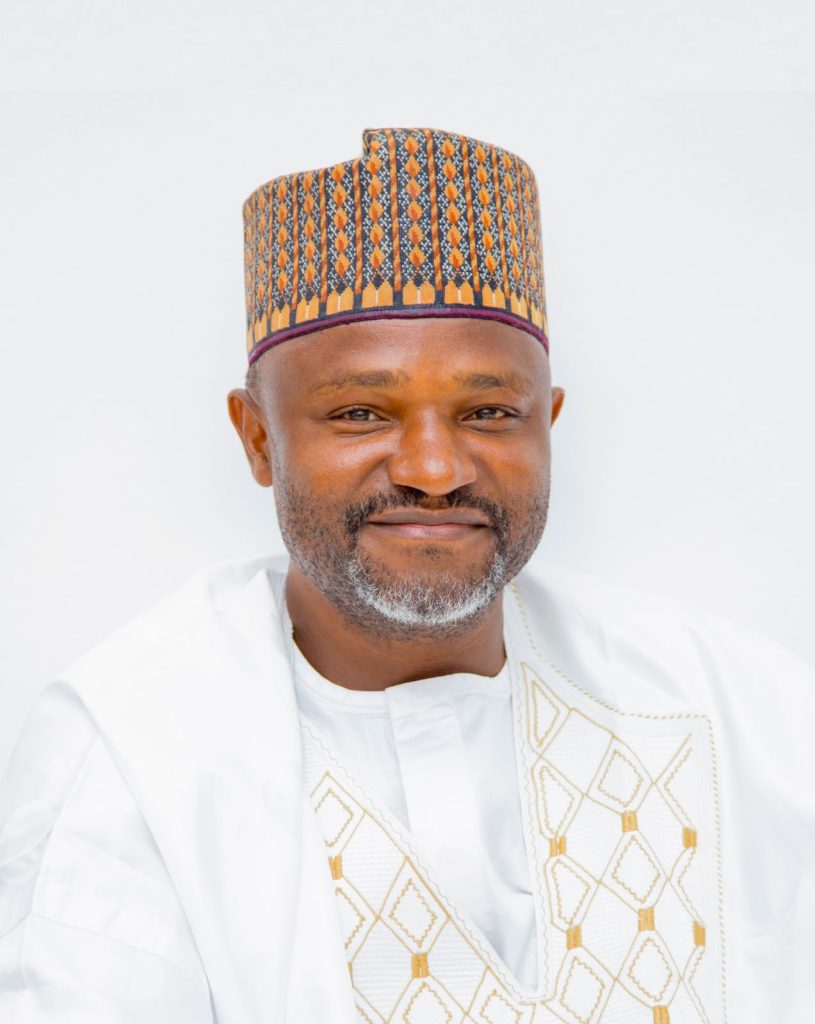
In a statement released on Monday by its National Publicity Secretary, Bolaji Abdullahi, the party said the proposal reflects what it termed a continuing pattern of fiscal recklessness and unrealistic planning under the Tinubu administration.
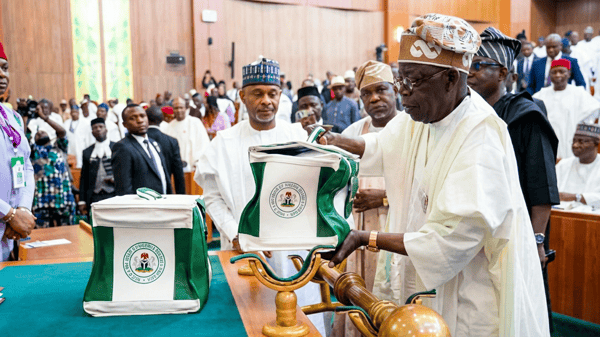
President Tinubu on Friday presented the ₦58.18 trillion 2026 Appropriation Bill to the National Assembly, expressing confidence in a gradual economic recovery and promising stricter fiscal discipline. The proposal, titled “Budget of Consolidation, Renewed Resilience and Shared Prosperity,” was laid before a joint session of the Senate and House of Representatives, with the President saying it aims to consolidate recent macroeconomic gains, restore confidence and deliver broad benefits to citizens.
Reacting, the ADC said the budget largely mirrors what it called the poorly implemented 2024 and 2025 budgets and warned that the 2026 plan could suffer a similar fate, with execution delayed or rolled over into future years.
According to the party, the government plans to spend ₦25.68 trillion on capital projects while running a projected deficit of ₦23.85 trillion, suggesting that most infrastructure would be financed through borrowing. It argued that this approach raises serious concerns, particularly where loans are used to fund expenditures it described as opaque or wasteful.
The ADC accused the administration of burdening future generations with debt, insisting that borrowing on such a scale to fund recurrent and non-transparent spending amounts to fiscal irresponsibility. It also described the APC-led government as disorganised, alleging that unresolved budget cycles have forced it to operate multiple budgets simultaneously.
The party said that despite the budget’s stated theme, the proposal represents a continuation of what it called reckless fiscal behaviour and unrealistic assumptions. It maintained that the 2026 estimates recycle the structure of previous budgets that were neither fully implemented nor credible.
The ADC further argued that Nigeria is facing deep fiscal challenges that require discipline and credible planning, rather than repeated revisions and overlapping budget frameworks. It claimed the administration has failed to confront these realities, instead relying on rising debt to cover structural weaknesses.
The opposition party questioned the sharp rise in revenue projections over recent years, noting that increases from ₦20 trillion in 2024 to ₦40 trillion in 2025, and now ₦58.57 trillion for 2026, are not supported by corresponding growth in productivity. It said much of the earlier revenue growth was driven by currency devaluation rather than real economic expansion.
It also criticised the assumptions underlying the budget, including the oil price benchmark of $64 per barrel, arguing that a more cautious approach was needed given weakening projections and global uncertainties. The party said the ₦34 trillion revenue target was disconnected from economic realities, particularly as the effects of naira devaluation have faded.
The ADC expressed concern about the size of the proposed deficit, warning that borrowing ₦24 trillion against projected revenues of ₦34 trillion points to severe fiscal imbalance. It argued that such a deficit-to-revenue ratio would be unacceptable in any sound fiscal system.
The party further highlighted rising debt servicing costs, noting that these are projected to increase from ₦12.63 trillion in 2024 to ₦15.52 trillion in 2026. It said this trajectory, driven by borrowing and currency pressures, is unsustainable and lacks any credible fiscal justification.
Concluding, the ADC said the Tinubu administration appears constrained by its own narratives and has failed to adjust course despite mounting warning signs. It called for a fundamental rethink of fiscal strategy, urging the government to adopt policies that prioritise long-term stability and the welfare of citizens over expanding debt obligations.