
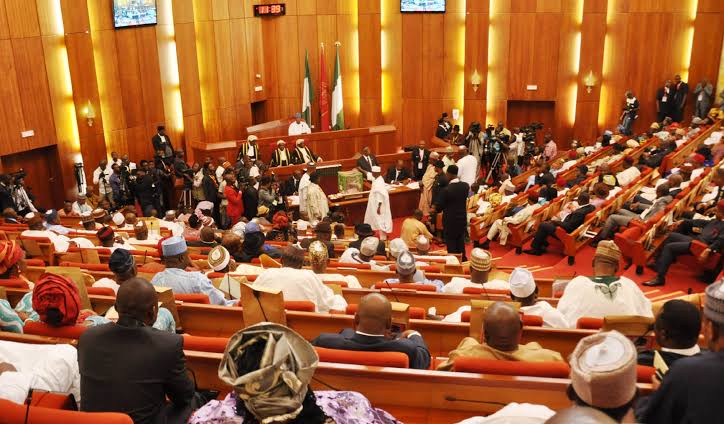
The Nigerian Senate on Tuesday passed the Electoral Act, 2022 (Repeal and Re-Enactment) Bill 2026 after a stormy sitting marked by sharp disagreements over Clause 60 and procedural objections on the floor.
Tension rose early in proceedings when Senator Enyinnaya Abaribe demanded a division on the controversial clause, triggering protests from several lawmakers. Senate President Godswill Akpabio said he believed the earlier demand had been withdrawn, but opposition members insisted the issue remained active.
Deputy Senate President Barau Jibrin cited the Senate rules to argue that revisiting a matter already ruled upon would be procedurally improper. His intervention fueled fresh disorder in the chamber, with a brief confrontation reported between senators during the exchange.
Senate Leader Opeyemi Bamidele countered that his motion for rescission effectively reset prior decisions, making Abaribe’s request valid under the new legislative posture. Akpabio subsequently sustained the point of order and directed that the process move forward.
Invoking the relevant standing order, Abaribe pressed for a vote on Clause 60(3), objecting to a provision that would allow manual transmission of election results if electronic transmission fails. He argued for removing the fallback option entirely.
When the division was called, senators were counted by standing. Official figures showed 55 lawmakers backing the proviso and 15 opposing it, allowing the clause to stand.
Earlier, deliberations had briefly stalled after lawmakers agreed to rescind the bill’s prior passage and return it to the Committee of the Whole for fresh clause-by-clause scrutiny. The step followed concerns tied to the timetable for the 2027 general elections announced by the Independent National Electoral Commission.
Bamidele explained that stakeholders warned of a possible conflict between the proposed election schedule and statutory requirements mandating polls at least 360 days before the expiration of current mandates. Additional worries were raised about the overlap with Ramadan and the potential implications for turnout, logistics and inclusiveness.
Lawmakers also cited drafting inconsistencies affecting the bill’s long title and numerous clauses, saying the errors disrupted internal references and numbering. After addressing the objections and completing reconsideration, the Senate moved to pass the revised legislation, clearing a key procedural hurdle for the electoral framework ahead of the next general election cycle.