
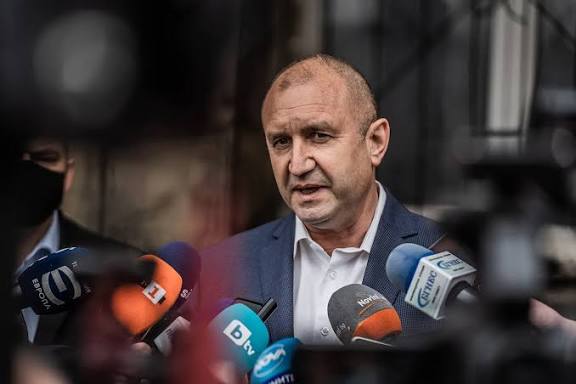
Bulgaria’s president announced on Monday that he would step down ahead of snap elections scheduled for the coming months, a move that has further intensified the political instability in the EU and NATO member state.
The Balkan nation, which officially adopted the euro on January 1, has been embroiled in renewed political turbulence following mass anti-corruption demonstrations that led to the collapse of a conservative-led government in December.
President Rumen Radev, who had openly backed the protests and frequently criticised the government, revealed last week that the country would head to its eighth election in five years after political parties failed to agree on forming a new administration.
In a televised address, Radev declared, “Today, I am addressing you for the last time as president of Bulgaria,” confirming that he would formally leave office on Tuesday.
The 62-year-old leader said he intended to continue the fight for Bulgaria’s future alongside citizens who are “dignified, inspired, and unyielding.” He blamed what he called a “corrupt system of governance” for widespread poverty, public unrest, and declining trust in state institutions.
There has been growing speculation that Radev may contest the upcoming election, as he has previously stated his desire to unite Bulgarians in the battle against corruption. His resignation makes him the first Bulgarian head of state to step down before completing his term since the end of communist rule.
Vice President Iliana Iotova, a former journalist and Socialist Party lawmaker, is expected to assume the role of interim president.
While the exact date for the elections has not been confirmed, they are expected to take place between late March and April. As interim head of state, Iotova will be responsible for appointing a caretaker prime minister and setting the election date.
Radev, a former fighter pilot and commander of the Bulgarian Air Force, was first elected president in 2016 with backing from the pro-Russian Socialist Party. He gained prominence during the 2020 anti-corruption protests, openly siding with demonstrators against then-Prime Minister Boyko Borissov.
He secured a second five-year term in 2021 with nearly 67 percent of the vote in the runoff election. Throughout his presidency, he frequently clashed with the government, particularly over Bulgaria’s support for Ukraine, opposing the provision of military aid to Kyiv.
Political instability has persisted since the 2020 protests, with repeated elections producing fragmented parliaments and unstable coalitions. The conservative GERB party won the most recent election last year and formed a government, but public backlash erupted in November over its proposed 2026 budget, which critics labelled as a cover for entrenched corruption.
Analysts suggest that Radev’s decision to resign and possibly run in the election is influenced by growing public support amid the protests. Parvan Simeonov of the Myara polling agency said the president sees a favourable political climate that could strengthen his position.
A recent survey by Market Links placed Radev’s approval rating at 44 percent, indicating significant public backing.
Despite political reforms, Bulgaria continues to rank among the most corrupt countries in the European Union according to Transparency International’s Corruption Perception Index.