

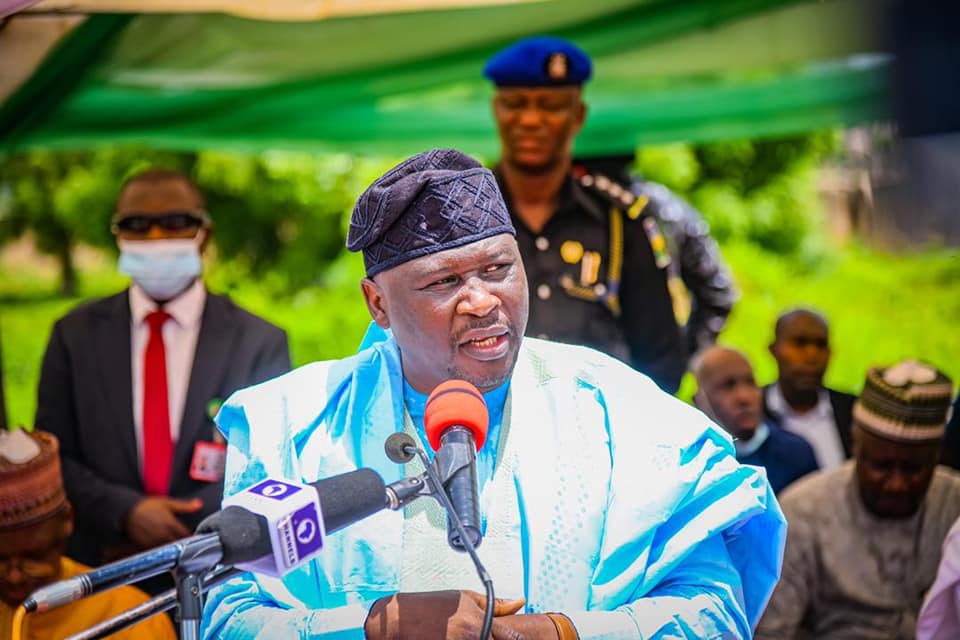
In the shifting terrain of Nigerian politics, where alliances are fluid and speculation often rivals substance, the name of Ahmadu Umaru Fintiri has remained firmly in the national conversation. As Governor of Adamawa State, Fintiri has found himself at the centre of persistent rumours, criticism, and sponsored commentaries suggesting a possible defection from the Peoples Democratic Party to the ruling All Progressives Congress.
These narratives, recycled almost daily in some sections of the media, have fuelled debates far beyond Adamawa’s borders. Yet, beneath the swirl of conjecture lies a more fundamental question about leadership, political rights, and governance priorities in a democratic system.
Speculation about Governor Fintiri’s political future did not arise in isolation. Across the country, defections have become a defining feature of the current political climate, driven by electoral calculations, internal party dynamics, and strategic positioning ahead of future contests. In this context, the attention focused on Fintiri reflects not only curiosity about party arithmetic, but also recognition of his growing political relevance.
The governor himself has repeatedly approached the issue with caution and clarity. In public engagements and tours across the state, he has maintained that politics must ultimately be about the people. He has stressed that his decisions are guided by consultation, collective interest, and the mandate freely given to him by the people of Adamawa. In doing so, he has framed the defection debate as secondary to the more pressing responsibility of governance.
Nigeria’s constitution guarantees freedom of association, including the right of individuals and political actors to align with any party of their choice. Party movement, therefore, is neither illegal nor unprecedented. What distinguishes serious leadership, however, is not the label worn, but the purpose pursued. Governor Fintiri’s stance underscores this reality: governance, not speculation, remains his central focus.
Despite the intensity of the rumours and the perceived pressure from both within and outside the state, there has been little indication that such noise has distracted the administration. On the contrary, the governor’s continuous engagement with communities, inspection of projects, and emphasis on consolidating development gains point to a leader anchored by purpose rather than political panic. He has consistently argued that leadership is measured by impact on lives, not by alignment with transient political currents.
The criticisms and sponsored attacks that trail his name are, in many ways, a reflection of his stature. In Nigerian politics, prominence often attracts both admiration and hostility. Leaders who demonstrate capacity, visibility, and influence inevitably unsettle competing interests. Governor Fintiri’s rise has placed him in that category of leaders whose actions are closely watched, interpreted, and sometimes deliberately misrepresented.
Supporters describe him as a national asset, a description that explains both the attention he attracts and the resistance he faces. His political relevance extends beyond Adamawa, making him a subject of interest to national power blocs and political commentators alike. For some, this relevance is a source of pride; for others, it is a source of unease.
As the debate continues, one reality remains constant: Governor Ahmadu Umaru Fintiri has not allowed rumours, threats, or manufactured scarcity of political comfort to define his leadership. His public posture continues to emphasise service, accountability, and loyalty to the people who entrusted him with office.
In the end, politics may remain dynamic and unpredictable, but performance leaves a lasting record. Whether amid praise or criticism, Governor Fintiri’s journey illustrates an enduring truth of public life: prominence invites scrutiny, but purpose sustains leadership. And, as the saying goes, a golden fish cannot hide forever.
written by A. A. Mshelia, Public Affairs Analyst from Abuja