
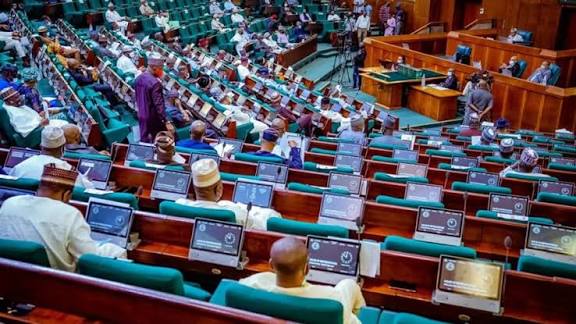
The House of Representatives on Thursday passed the Electoral Act (Amendment) Bill, 2025, but voted down a controversial proposal seeking to criminalise vote-buying during party primaries.
The rejected clause had sought to impose a two-year jail term, without an option of fine, on anyone found to have financially or materially induced delegates to influence the outcome of party primaries, congresses or conventions.
The provision, listed as Clause 89(4) and introduced during the amendment stage, was overwhelmingly opposed by lawmakers during the clause-by-clause consideration of the bill at the Committee of the Whole, presided over by Deputy Speaker Benjamin Kalu.
With the deletion of the clause, inducement of delegates at party primaries will not attract criminal sanctions under the amended law.
Briefing journalists after the passage of the bill, Chairman of the House Committee on Electoral Matters, Adebayo Balogun, said the House opted for limited and focused amendments rather than a complete overhaul of the Electoral Act 2022.
Balogun explained that although the bill was initially proposed to repeal the existing Act and replace it with a new one, many far-reaching reforms failed to attract sufficient support during legislative consideration.
He said proposals such as early voting, voting rights for inmates, replacement of the Permanent Voters’ Card with alternative accreditation systems, and changes to electoral timelines did not secure broad consensus at committee level.
“In legislative practice, a repeal and re-enactment is only appropriate where the proposed changes fundamentally alter the character of the existing law,” Balogun said.
He noted that lawmakers instead agreed on targeted amendments aimed at strengthening the current electoral framework, addressing identified gaps and improving implementation without destabilising the system.
Balogun added that the committee’s work was guided by extensive consultations with the Independent National Electoral Commission, security agencies, political parties, civil society groups, professional bodies and development partners.
While acknowledging that some reform ideas, including stricter penalties for vote-buying at party primaries, were not adopted, he said such proposals remain part of ongoing national discourse and could be reconsidered in the future if wider agreement is achieved.