
By Mustapha Umar
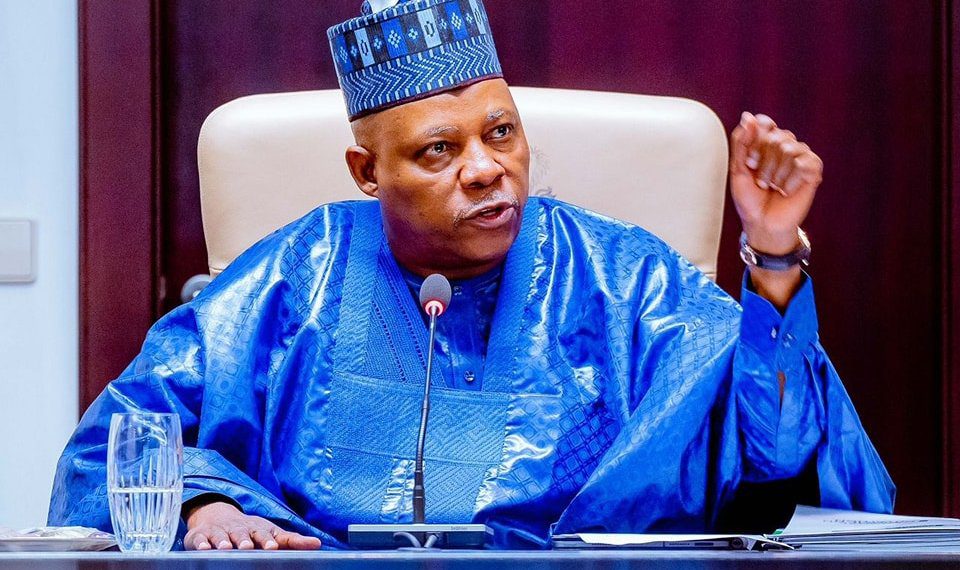
Vice President Kashim Shettima has urged Nigerians living abroad to play a more active role in the country’s economic transformation, stressing that the government is creating avenues for diaspora investment and business growth.
Speaking at the 8th Nigeria Diaspora Investment Summit in Abuja on Wednesday, themed “Fast-Tracking Regional and National Development by Mobilising Diaspora Investment,” Shettima lauded the Nigerians in Diaspora Commission (NiDCOM) under Abike Dabiri-Erewa for its consistency in promoting diaspora engagement.
Represented by the Permanent Secretary of the Ministry of Foreign Affairs, Ambassador Dunoma Ahmed, the Vice President said the Tinubu administration’s development strategy hinges on collaboration among the public sector, private sector, and the diaspora community.
“The theme of this summit is profoundly timely. It reflects the administration’s ambition to build a Nigeria that grows from the combined strength of its people, at home and abroad,” Shettima stated.
He outlined key government initiatives targeted at engaging the diaspora, including the Home and Abroad Housing Platform, partnerships with the National Agency for Science and Engineering Infrastructure (NASENI), and the proposed Diaspora Bond.
According to him, the bond will provide Nigerians abroad a direct stake in national development by funding major infrastructure projects.
“Reforms such as the Non-Resident BVN and a competitive exchange rate have encouraged formal remittances, which now sustain millions of households and small businesses, amounting to about $21 billion in 2024,” he added.
Highlighting the role of Micro, Small and Medium Enterprises (MSMEs) in economic growth, Shettima said the government had rolled out the ₦75 billion MSME Intervention Fund to support 75,000 small businesses struggling with access to finance.
He also reaffirmed infrastructure development as a major priority, calling on diaspora investors to support projects in transportation, technology, and innovation.
“Come home, not only physically, but economically,” he urged. “Invest in our roads, startups, and people. Your expertise and resources are indispensable to our national development project.”
Other government officials at the summit echoed the Vice President’s call for increased diaspora participation in nation-building.
Minister of Information and National Orientation, Mohammed Idris, pointed to the improved investment environment, noting Nigeria’s recent removal from the Financial Action Task Force’s grey list as a boost to investor confidence.
Minister of Steel Development, Shuaibu Audu, said the government is offering fiscal incentives to attract diaspora investors to the steel and metal industry, adding that at least 30 per cent of raw materials for steel production will now be sourced locally.
Similarly, the Minister of Solid Minerals Development, Dele Alake, revealed that the mining marshals established by his ministry have arrested over 300 illegal miners and secured 20 convictions, including foreigners, as part of reforms to sanitise the sector.
The President’s Special Adviser on Media and Public Communications, Sunday Dare, described Nigerians abroad as “strategic partners” in the Renewed Hope Agenda, stressing that the administration is working to deepen their integration into development programmes.
NiDCOM Chairperson, Abike Dabiri-Erewa, praised the diaspora community as “Nigeria’s most valuable ambassadors,” urging them to invest beyond remittances.
“We must channel this capital, expertise, and goodwill into sustainable investments that transform lives, create jobs, and drive inclusive growth,” she said.
She noted that remittances from Nigerians abroad reached $25 billion in 2024, underscoring their vital role in national stability and economic resilience.
Chairperson of the Summit’s Local Organising Committee, Dr. Badewa Adejugbe-Williams, reflected on the event’s growth since its inception in 2018, describing it as a bridge between Nigerians abroad and business opportunities at home.
“Eight years ago, this summit began as a modest idea. Today, it has become a vibrant platform connecting global expertise to local opportunities,” she said.
Nigeria’s diaspora, estimated at over 17 million people, continues to be one of the country’s strongest economic assets — a reality the government says it intends to harness through structured investment frameworks and sustained engagement.