
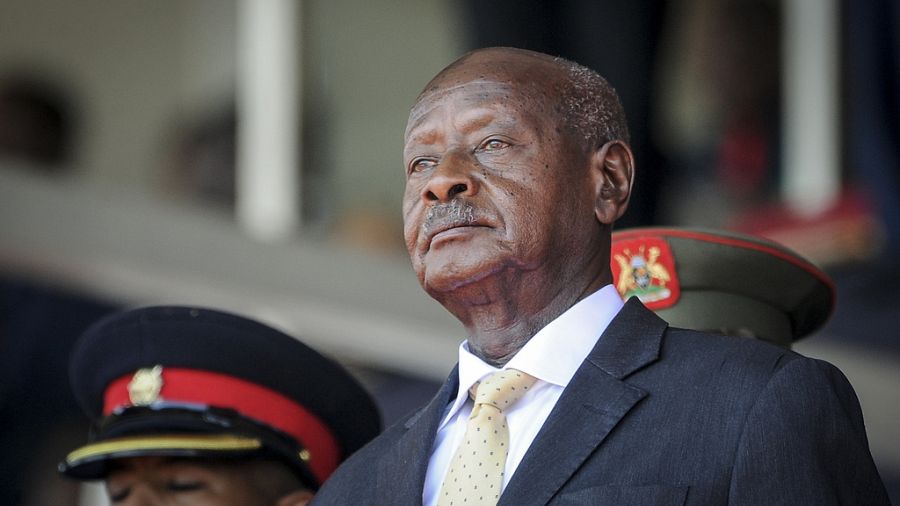
Ugandan President Yoweri Museveni secured a seventh term in office on Saturday following a highly contested election marked by violence, widespread arrests, and a nationwide internet shutdown that drew criticism from observers.
The Electoral Commission announced that the 81-year-old leader polled 71.65 percent of the votes cast in Thursday’s election, a result that extends his four-decade hold on power in the East African nation. His closest rival, Bobi Wine, a 43-year-old former musician turned politician, garnered 24.72 percent.
Wine, who has been a persistent critic of Museveni’s government, said he was forced into hiding after security forces allegedly raided his residence on Friday night. He rejected the official results, describing them as fraudulent, and claimed he narrowly escaped arrest.
“I managed to escape from them,” he wrote on X on Saturday, adding that his wife and other family members were still under house arrest. He further alleged that authorities were actively searching for him.
Witnesses in Kampala reported a heavy security presence as police sought to prevent protests similar to those recently witnessed in Kenya and Tanzania. Authorities, however, denied raiding Wine’s home, saying they were only maintaining security in areas they considered volatile.
Police spokesperson Kituuma Rusoke said officers were controlling access around the opposition leader’s residence to prevent gatherings that could spark unrest. A nearby stall owner said many residents had fled the area out of fear after hearing helicopters and seeing armed personnel overnight.
Wine, whose real name is Robert Kyagulanyi, has accused the government of manipulating the vote and targeting his party members during the internet blackout imposed before the election.
While African election observers said they found no concrete evidence of ballot stuffing, they expressed concern over reports of intimidation, arrests, and abductions targeting opposition figures and civil society groups. Former Nigerian president Goodluck Jonathan, speaking on behalf of observer missions from the African Union and regional bodies, said these incidents had created an atmosphere of fear and undermined public confidence in the electoral process.
He also noted that the internet shutdown hindered effective monitoring of the polls, though he described voting on election day as largely peaceful.
Provisional results showed Museveni’s National Resistance Movement party also leading in parliamentary seats, reinforcing its dominance in Ugandan politics.
Analysts had widely viewed the election as a foregone conclusion, given Museveni’s tight grip on state institutions and security forces since coming to power in 1986. His administration has consistently suppressed dissent, and several opposition figures remain under legal or physical pressure.
There were also reports of deadly clashes in some areas. A lawmaker from Wine’s party alleged that security forces killed 10 of his campaign agents during a raid. Police disputed this claim, saying officers acted to prevent an attempted attack on a local tally centre and police station.